Nine months after Charlie Kirk was killed at Utah Valley University, the questions surrounding his death and the organization he left behind have not slowed down. If anything, they have multiplied. On this episode of The Amania Show, host Amania Saluste asks a question that cuts straight to the heart of legacy and leadership: would Charlie Kirk recognize the organization he built?
Charlie Kirk built Turning Point USA on a simple premise. Good ideas can withstand scrutiny, and bad ideas fall apart under it. He walked onto college campuses across the country and debated students on abortion, immigration, gender ideology, and government, never shying away from a hard question. That willingness to engage, rather than avoid, is what Amania argues defined him.
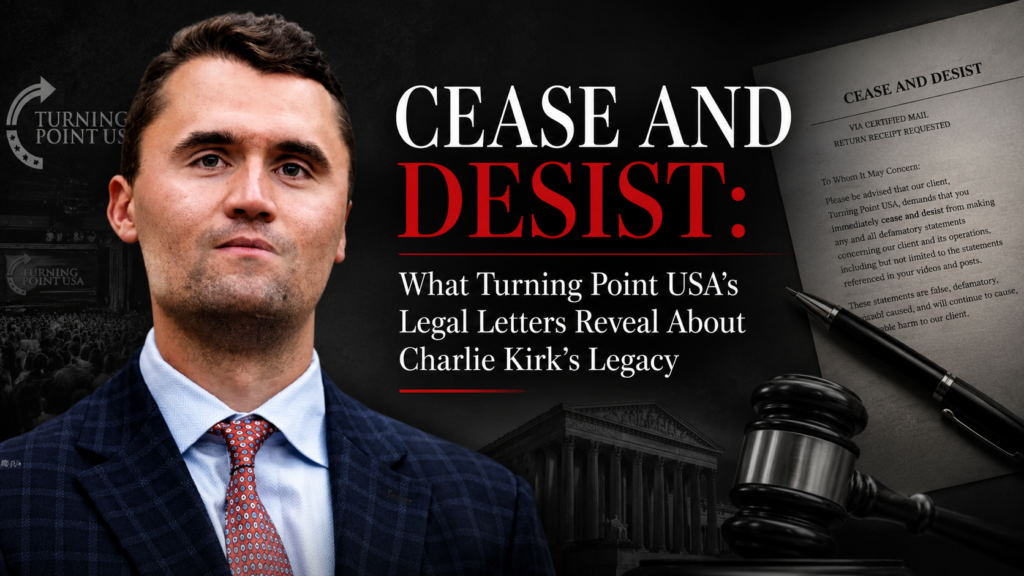
So when Turning Point USA, now led by CEO Erika Kirk, began sending cease and desist letters to independent creators covering the organization’s finances, Amania could not help but ask whether that response fits the man whose name is on the building. One of those creators, Zach De Gregorio of the channel Wolves and Finance, received a letter demanding he stop making what the organization called defamatory statements about Charlie Kirk’s death and the group’s internal operations. De Gregorio, whose channel had a fraction of Turning Point USA’s reach, has said publicly that he stands by his reporting.
The timing raises its own set of questions. Just seven days before his death, Charlie Kirk sent an internal memo announcing a company wide review of Turning Point USA’s finances, elevating Justin Streiff to Chief Operating Officer and tasking him with leading what Kirk himself referred to as a DOGE style effort. Kirk wanted the initiative treated as a top priority. Whether that effort continued in the same spirit after his death is a question Amania puts directly to the organization and its leadership.
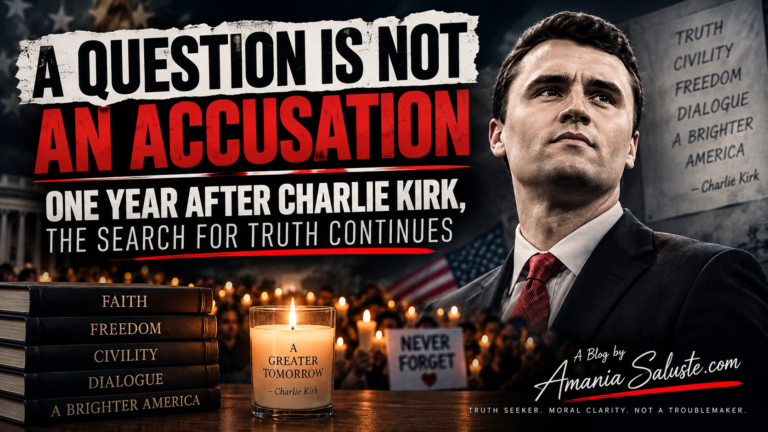
Amania is careful to frame this as commentary and inquiry, not accusation. The show’s position is that Charlie Kirk earned his reputation by debating his critics, not silencing them, and that the people now representing his legacy owe the same posture to the creators and supporters still asking questions on his behalf.
Culture Corner: Temporary Protected Status and the Fight Over Haiti
In the second half of the episode, Amania turns to Temporary Protected Status, a designation that has been back in the headlines after the Supreme Court’s ruling in Mullin v. Doe cleared the way for the Trump administration to end TPS protections for hundreds of thousands of Haitian and Syrian nationals.
Amania walks through the history of the program, created by Congress in 1990 to give people already living legally in the United States a temporary reprieve when a crisis strikes their home country. Haiti was designated for TPS in 2010 following the devastating earthquake. Sixteen years later, the designation is still in place, layered now with a presidential assassination, gang violence, and ongoing instability in Haiti.
Amania compares Haiti’s situation to El Salvador, a country that was removed from TPS after years of internal rebuilding. Her question for Haiti is not about America’s generosity, which she says has been real, but about what the country of origin has done in the years it has had to prepare for the day the designation ends.
The House of Representatives has since passed a bipartisan measure, led by Representatives Ayanna Pressley and Laura Gillen and supported by Florida Congressman Maxwell Frost, extending Haiti’s TPS designation until 2029. Amania welcomes the relief but argues that another three year extension is still a band-aid, not the permanent legislative solution that families who have built their lives here for over a decade deserve.
Watch the full episode of The Amania Show every Wednesday at 12:30 PM EST on Facebook, YouTube, Rumble, and X, or listen wherever you get your podcasts.
We come with a sword, the sword of truth.