Truth Can Withstand Scrutiny: Holding Turning Point USA to Its Own Words

There is an old show Amania has been returning to lately, the original Charlie’s Angels. Before it was anything else, it was a show about investigators. Three women, overqualified and underused, given a chance by a man named Charlie to do the work they were built for. Every week they went out and asked questions. It did not matter if the trail led to a stranger or a friend. They lifted up every rock. They went down every rabbit hole. They were looking for the truth.
Watching it again, a question rose up that would not sit down. We have spent weeks on this show asking what happened to Charlie Kirk. So where are Charlie’s angels? Who among his many friends is still willing to do the uncomfortable work of asking the hard qu
estions now that he cannot ask them for himself?
A show about loyalty, not accusation
Let the disclaimer be plain, because it is the ground this show stands on. This is investigative commentary, opinion, and potential inquiry. Everything here is based on publicly available information. We live at allegedly, potentially, and possibly. We are not here to accuse anyone. We are here to ask questions, because accountability is not hostility.
The real conversation is about loyalty. It is about friendship. It is about who shows up to represent you and stand up for you when you are no longer in the room. We count on our friends for that. And a man like Charlie Kirk, by every account, had friends in abundance.
The one who keeps asking
Candace Owens has said, plainly and repeatedly, that Charlie was her friend, that there are unanswered questions, and that she will keep investigating no matter what anyone says. Whether you agree with her conclusions or not, she is doing something. And she is not new to this work. People applauded her when she investigated Black Lives Matter in her documentary. They were on board when she dug into Brigitte Macron, when she examined Kamala Harris during the election, when she took on Harvey Weinstein and the Me Too movement. Her work was called brilliant then.
So Amania asks the honest question: why does the same work become a conspiracy theory the moment the subject is Charlie Kirk? An investigation, by definition, is not finished. It is open. It leaves room for new things to come in and for old assumptions to change. That is what makes it an investigation and not a press release.
Charlie Kirk himself did not simply swallow official narratives. He questioned Butler. He questioned the Epstein story. He questioned a great deal. It is fair to ask whether a man like that would have wanted his friends to stop asking questions the moment he was gone.
The friends with microphones
Then there are the four women. Allie Beth Stuckey, who holds tightly to Scripture and has framed the whole thing as a matter of due process and slander. Liz Wheeler, who says she values truth but objects to the method. Riley Gaines, who called the effort distasteful. Laura Trump, former co-chair of the Republican National Committee, who asked simply for the conspiracy theories to stop.
Every one of them has a platform. Every one of them has influence, the kind that shapes who audiences trust, support, vote for, and give to. And Amania’s observation is this: not one of them is doing an investigation of their own. The energy is aimed at rebutting Candace Owens, not at seeking answers for Charlie. When you notice how often the phrase conspiracy theory appears, it is worth remembering how many stories dismissed that way on the right have a habit of aging into fact.
Scripture as a lamp, not a dagger
This is why Amania chose these particular women. Three of the four speak openly from a biblical worldview, and the Bible has a great deal to say here. We are told to seek truth and to seek justice. We are warned that without truth we are lost. Ephesians 4:15 calls us to speak the truth in love, holding conviction and compassion together at the same time.
The concern is not that these women quote Scripture. It is the sense that Scripture is being used as a dagger pointed at a fellow believer rather than as a lamp for genuine discernment. Speaking truth is a calling, whether it costs us or not. We live in truth, and we do it in love. Nobody is putting Candace in a corner, and nobody is putting any of us in a corner either.
Culture Corner: a law for the powerful
The second half turns to Prime Minister Benjamin Netanyahu, who is on American soil as this episode airs, in Washington around the funeral of the late Senator Lindsey Graham and looking ahead to the United Nations. There is an International Criminal Court arrest warrant tied to the war in Gaza. New York Mayor Zohran Mamdani has called Netanyahu a war criminal and said he is not welcome in the city, while acknowledging the city cannot enforce the warrant itself. President Trump has said Netanyahu will not be arrested.
Amania walks through the history of the court, its long focus on Africa, and the striking detail that the judges who approved the warrant have been sanctioned by the United States, unable to book a hotel or use ordinary credit cards, while the man they named moves freely among friends. When leaders defended the Rome Statute, one framed it as justice for places without rule of law, not for nations like ours. Amania sits with the uncomfortable implication of that framing: a law written to reach the powerless and to spare the powerful.
The question that stays
This episode does not hand anyone a verdict. It asks a question about character. When someone you loved is gone and the story does not add up, do you go quiet because it is easier, or do you keep lifting up the rocks? Amania’s answer is rooted in faith and in friendship. Seek the truth, speak it in love, and do not let it go.
We come with a sword, the sword of truth. #TheAmaniaShow
SEO keywords: Charlie Kirk investigation, Candace Owens Bride of Charlie, Charlie’s Angels loyalty, Allie Beth Stuckey Candace Owens, Liz Wheeler, Riley Gaines, Laura Trump, Erika Kirk, Turning Point USA, Tyler Robinson trial, Netanyahu ICC arrest warrant, Zohran Mamdani, Lindsey Graham funeral, biblical truth seeking, faith and culture commentary, Ephesians 4:15.
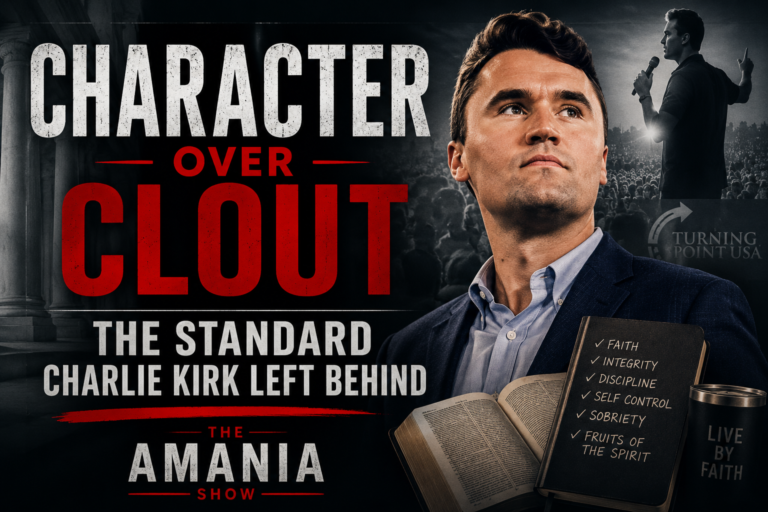
When we lose a public voice, the first instinct is to talk about the platform
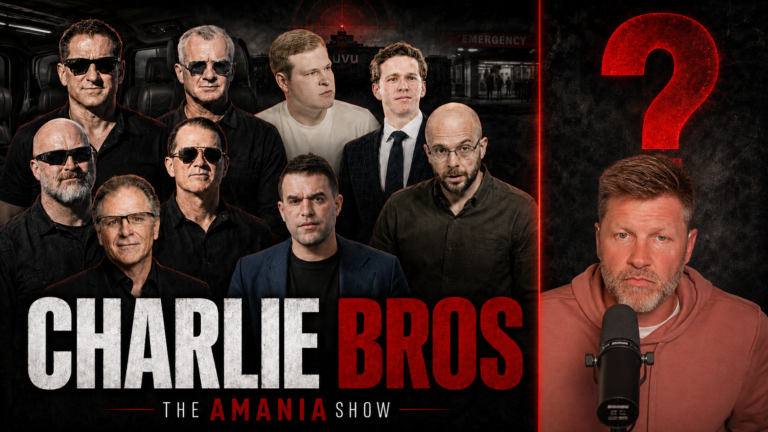
Charlie Kirk was not alone on September 10th. That is the part worth sitting with.